
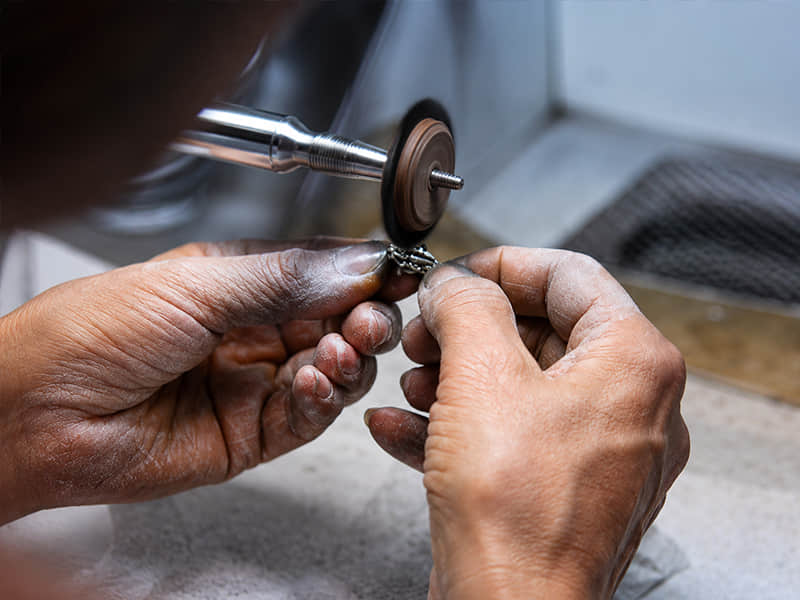
Casting alone is not enough to create premium jewelry. What truly determines whether jewelry looks luxurious or inexpensive is the finishing process after casting. This stage includes grinding, polishing, stone setting, welding, and hand-finishing. These details are often the biggest difference between ordinary fashion jewelry and premium lightweight luxury accessories.
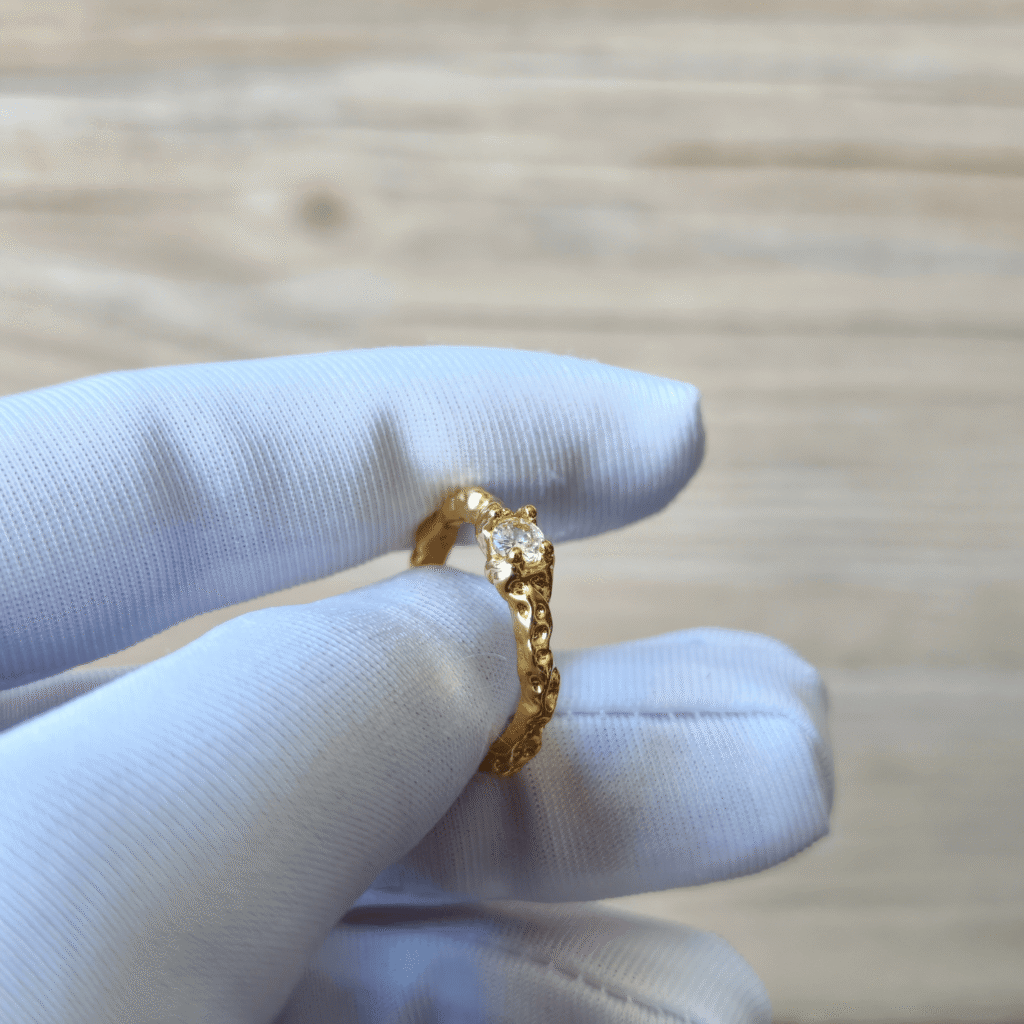
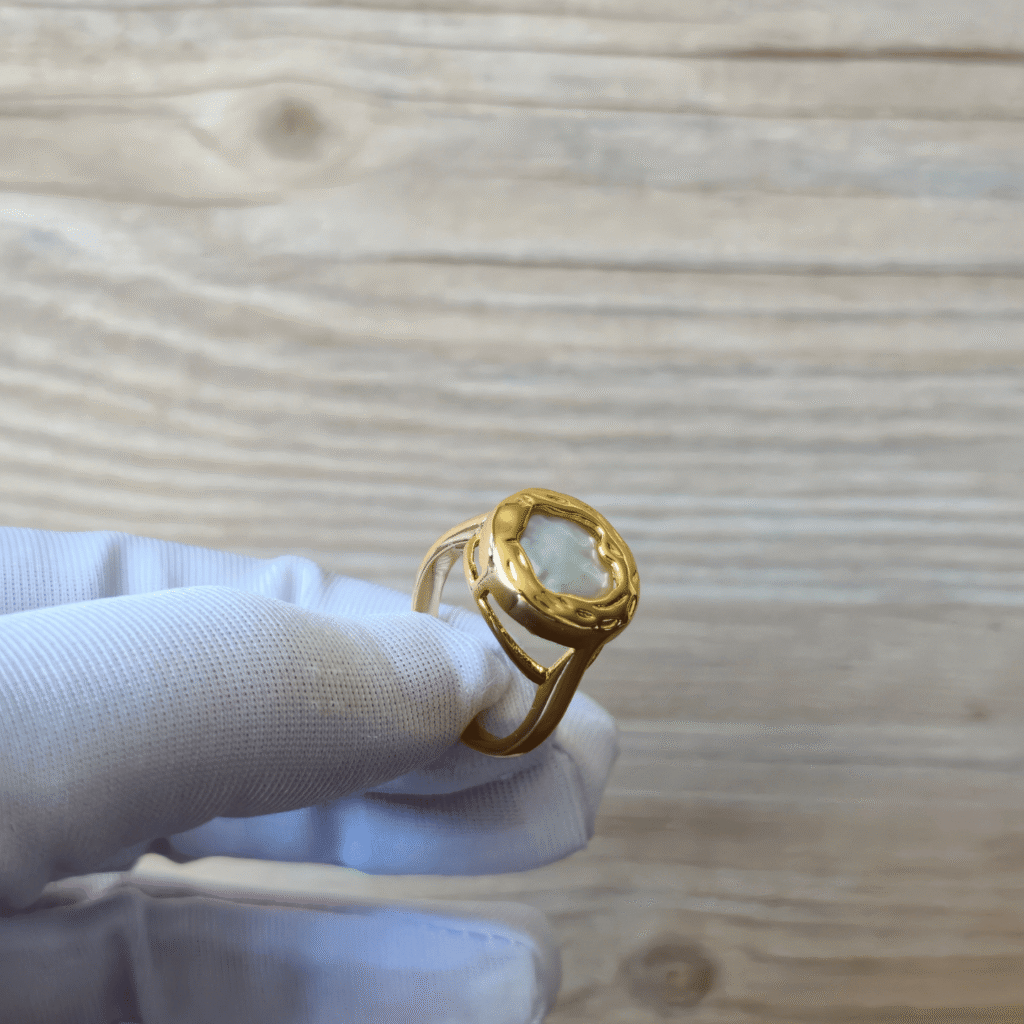
After casting, jewelry pieces still contain rough edges, burrs, casting gates, and surface imperfections. Factories remove these defects through grinding and surface correction. For molten metal jewelry and organic irregular shapes, hand-finishing becomes especially important because workers must preserve the artistic texture while improving smoothness and comfort.
Polishing is one of the most critical stages in high-end jewelry manufacturing. Factories usually perform several levels of polishing, starting with rough polishing, then medium polishing, followed by fine polishing and mirror polishing. For sculptural jewelry designs, mirror polishing is essential because reflective metal surfaces create the luxurious visual effect customers expect. Even a well-designed piece can look cheap if the polishing quality is poor.
Modern fashion jewelry often combines metal with decorative materials such as pearls, mother-of-pearl, resin, colored stones, and simulated natural stones. Different materials require different setting methods. Glue setting is commonly used in lightweight luxury jewelry because it is efficient and suitable for pearls and resin elements. Bezel setting surrounds stones completely with metal edges and is often used for vintage-inspired rings and cabochon stones. Prong setting, commonly used for crystals and faceted stones, creates a more refined and premium appearance by maximizing light reflection.
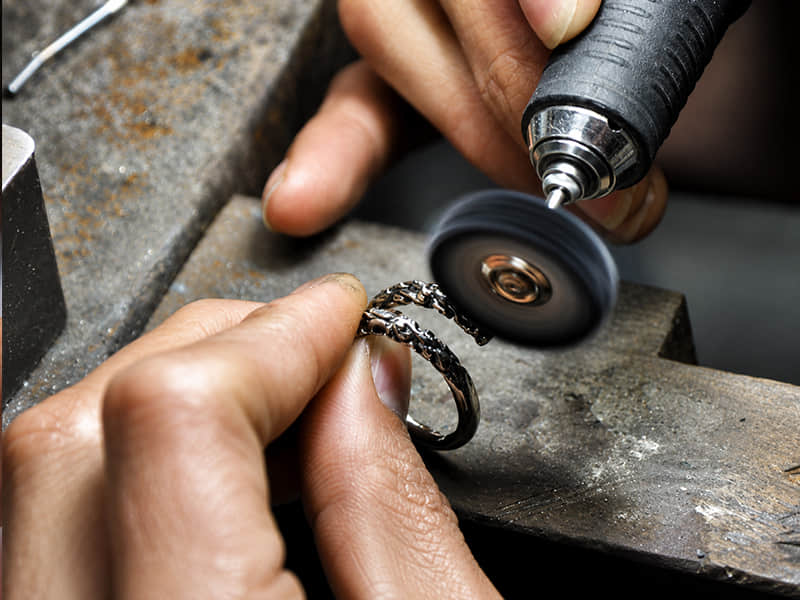
Many jewelry components are manufactured separately and assembled later. Ear posts, pendant loops, jump rings, and hanging charms often require laser welding or flame soldering. Welding quality is extremely important because weak assembly points can lead to breakage during wear.
For premium jewelry collections, many finishing details are still completed manually. Workers may refine textures, correct shapes, enhance surface details, or create handmade vintage effects. These small handcrafted adjustments often create the final luxury feeling customers immediately recognize.
The finishing stage is where jewelry truly gains its texture and character. Luxury appearance does not come from design alone. It comes from smooth surfaces, precise polishing, stable stone setting, strong assembly work, and refined handcrafted details.