
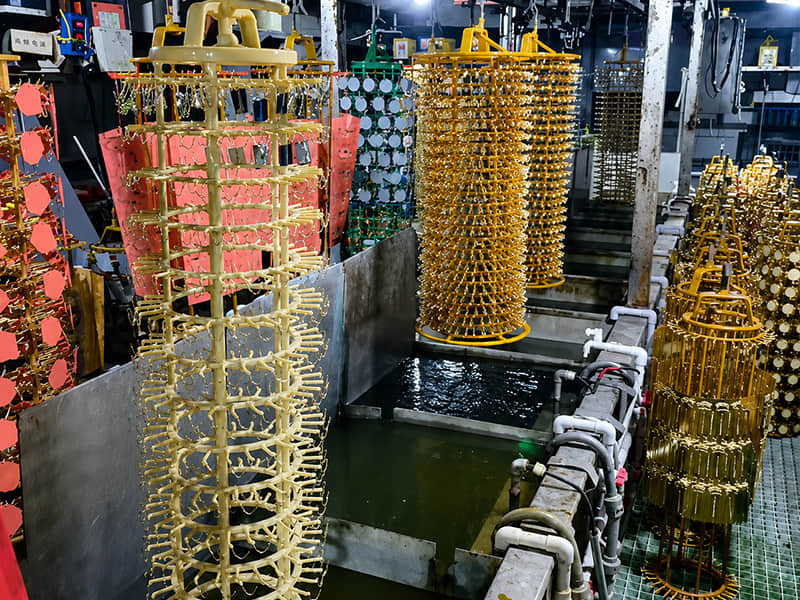
Most of the jewelry we produce uses brass or copper alloy as the base material. Without proper plating protection, these materials would oxidize quickly and lose their visual appeal. That’s why we place great importance on every plating step, because the final gold finish is what customers see and feel first.
Before the gold plating stage, we apply multiple protective layers to stabilize the surface and improve long-term durability. Our common plating structure includes nickel, palladium, and then real gold plating. The nickel layer helps improve adhesion and surface smoothness, while the palladium layer acts as a protective barrier that enhances corrosion resistance and helps maintain stable gold color over time.
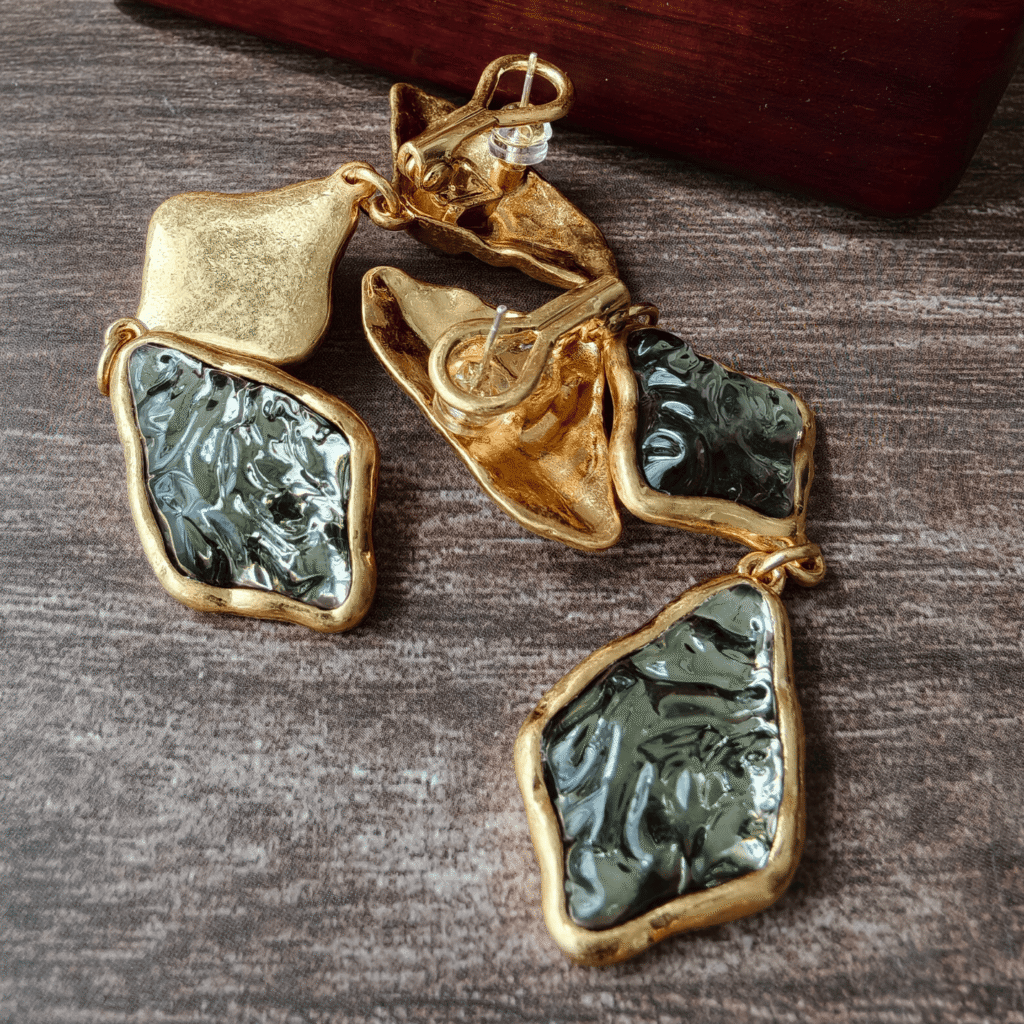
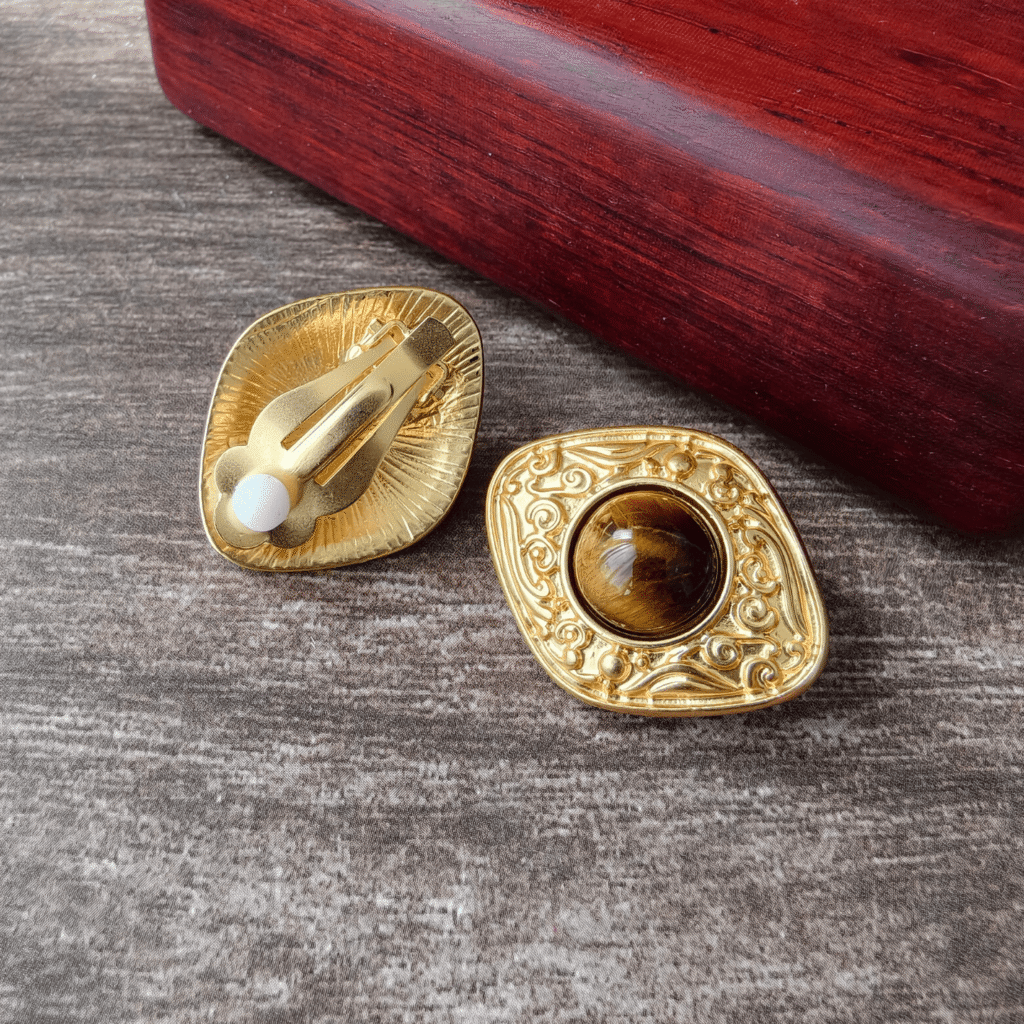
For the final finish, we use real gold plating such as 18K gold or 24K gold, depending on the customer’s positioning and target market. Different gold tones can also be customized to match various brand styles, from soft vintage gold to brighter luxury finishes.
One of the biggest differences we see between low-end accessories and premium jewelry is plating thickness. Many low-cost products on the market use extremely thin gold layers, sometimes only 0.02μm, which wear off very quickly during daily use. At our factory, we focus heavily on thick gold plating technology. For many premium projects, we produce heavy gold plating ranging from 0.6μm to 2μm, which significantly improves wear resistance, color retention, and overall product value perception.
For customers who require higher durability, we also apply E-coating after gold plating. This transparent protective layer helps improve resistance against sweat, oxidation, and surface scratches while maintaining long-lasting shine. For modern lightweight luxury jewelry designed for everyday wear, E-coating has become an extremely important step.
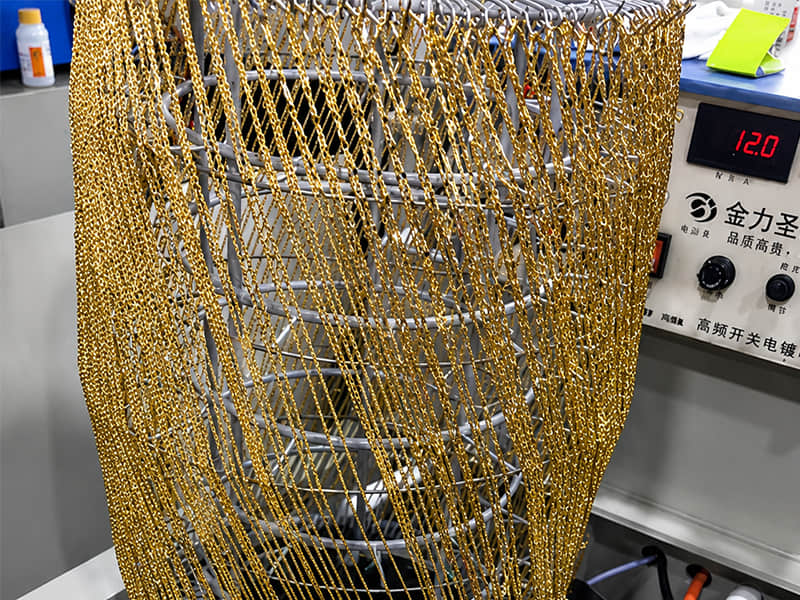
Quality control is another area we take very seriously. During production, our team carefully inspects plating color consistency, surface smoothness, welding strength, and stone security. In our experience, loose stones, uneven plating color, rough polishing marks, and weak welding points are some of the most common reasons for customer complaints and returns, so we pay close attention to these details throughout production.
We also believe packaging plays an important role in how customers perceive jewelry quality. For many European and American clients, minimalist packaging often creates a stronger luxury feeling than overly decorative designs. That’s why many of our packaging solutions focus on clean presentation styles such as cream white boxes, linen textures, beige tones, and modern minimalist aesthetics.
In recent years, we’ve seen heavy gold plating become one of the defining technologies behind modern lightweight luxury jewelry. More brands are moving toward sculptural shapes, organic textures, vintage gold finishes, and thicker real gold plating. From our perspective, factories that can combine strong design capability, stable plating quality, refined finishing, and consistent production standards will continue becoming more competitive in the global fashion jewelry market.